
“If there ever were a red ocean,” observes Michael Levie, co-founder of citizenM Hotels, “the hotel industry would be it. It’s redder than red.”
Four-star hotels offer four-fifths of what five-star hotels offer. Three-star hotels offer three-quarters of what four-star hotels provide. And so on down to one-star hotels that offer roughly half of what two-star hotels offer. In other words, they all compete on essentially the same things. “In this industry,” says Levie, “people think they’ve innovated if they change the paint color on the walls or switch the type of chocolate on the pillow.”
Against this backdrop, Rattan Chadha and Michael Levie, co-founders of citizenM – both new entrants to the hotel industry – wanted to create a blue ocean with a new kind of hotel chain. One that would capture the growing mass of frequent travelers – what they call “mobile citizens” – whether traveling for business or for pleasure.
citizenM’s blue ocean strategy at a glance
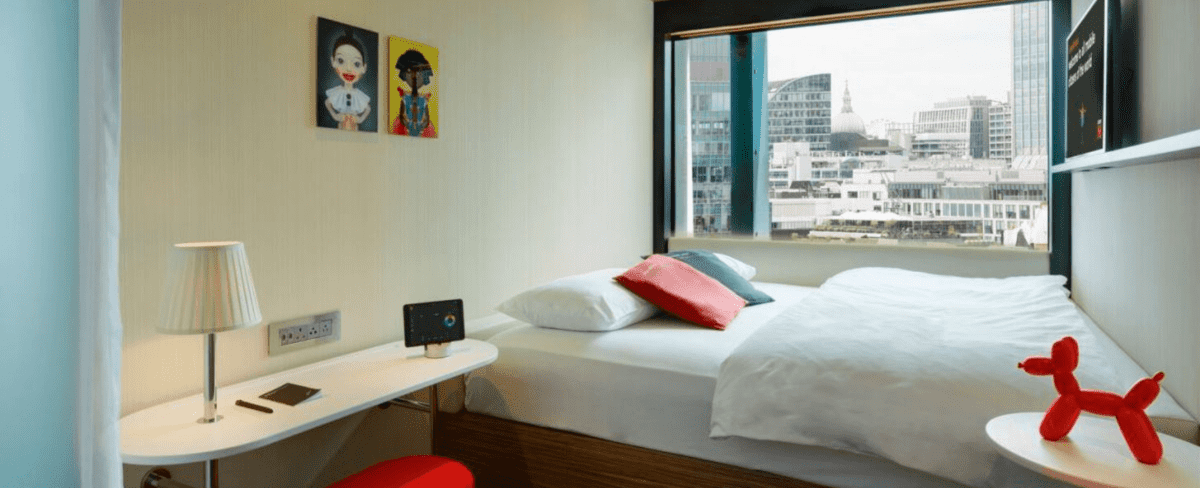
citizenM launched its first hotel in Amsterdam, opening up a new value-cost frontier of affordable luxury for frequent travelers.
See citizenM’s full ERRC Grid below
The result is an average occupancy rate of 90% across its hotels – 80% higher than the industry average. The chain’s cost of staff is 50% lower than the industry average and profitability per square meter twice that of comparable upscale hotels.
Source: Chan Kim and Renée Mauborgne, Blue Ocean Shift
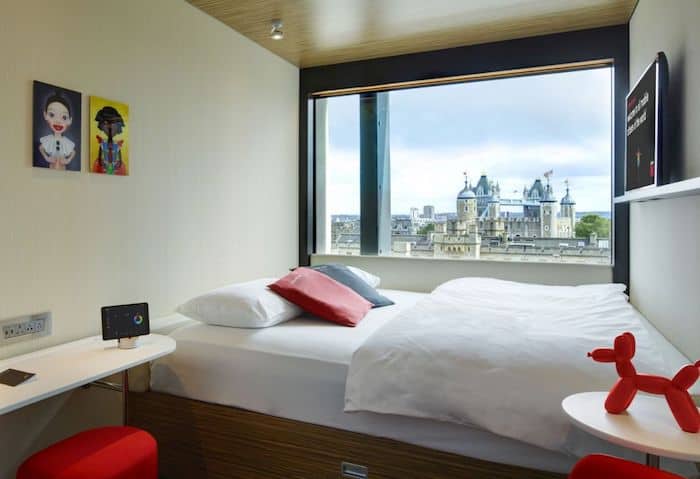
A Blue Ocean Strategy in the Hotel Industry, citizenM’s hotel in London.
A red ocean of hotels all competing on the same factors
The two entrepreneurs noticed that many of these “mobile citizens” were frequenting either three-star or luxury hotels. Sensing a blue ocean opportunity, they wanted to understand why frequent travelers chose luxury hotels over three-star hotels and vice versa. As they did, a host of insights began to emerge.
Despite all the factors the hotel industry competes on, it turned out that only three factors stood out as decisive in determining why frequent travelers traded up to five-star hotels over three stars: the feeling of luxury and beauty they experience; its more luxurious sleeping environment; and their prime location. As for those who choose a three-star hotel over a five-star, price jumped out as the most common factor, followed by one other: five-star hotels often felt too formal and pretentious. The Eliminate-Reduce-Raise-Create Grid (ERRC Grid), a key blue ocean analytic, allows us to lay this out.
ERRC Grid: What to eliminate, reduce, raise, and create
By gaining these insights, Chadha and Levie identified which factors to eliminate, reduce, raise and create. For example, the customers of neither five-star nor three-star hotels saw the front desk, concierge service, bellhops, or doormen as bringing them much added value. citizenM saw these as factors they could eliminate.
citizenM Hotels’ ERRC Grid
- Front desk and concierge service
- Bellhops and doormen
- Full service restaurants and room service
- Lobby
- Sleeping environment
- Prime location
- Free movies on demand, phone-calls at VoIP rates, free instant high-speed internet & lots of plugs for guests’ gadgets
- Guest room types
- Room size
- Price compared to luxury hotels
- Kiosks for 3-minute self check-in
- Communal living environment with 24/7 bar, pantry & iMacs
- Multi-tasking “ambassadors”
© Chan Kim & Renée Mauborgne, Blue Ocean Shift: Beyond Competing – Proven Steps to Inspire Confidence and Seize New Growth
Next, since the “mobile citizens” they were targeting aren’t the type of customer that spends much time in their room, they realised they could reduce room size – and cost – as this also meant more rooms per square foot of real estate space. And instead, to maintain a high level of comfort and luxury, they raised the quality of the sleeping environment with extra-large king beds, fine linens, good sound insulation, fluffy towels and amazing showers.
Finally, through these market insights, Chadha and Levie discovered that there were new kinds of value that they could create. They eliminated the front desk, replacing it with self-check-in kiosks allowing guests to check in with no lines. And in case help was needed, front desk staff were replaced with multi-tasking ‘ambassadors’ who could help with anything from giving directions to shaking a cocktail.
Take a look at citizenM strategy as expressed through a value curve on the strategy canvas here. Explore other powerful strategy canvas examples to see what other organizations eliminated, reduced, raised, and created to stand apart.
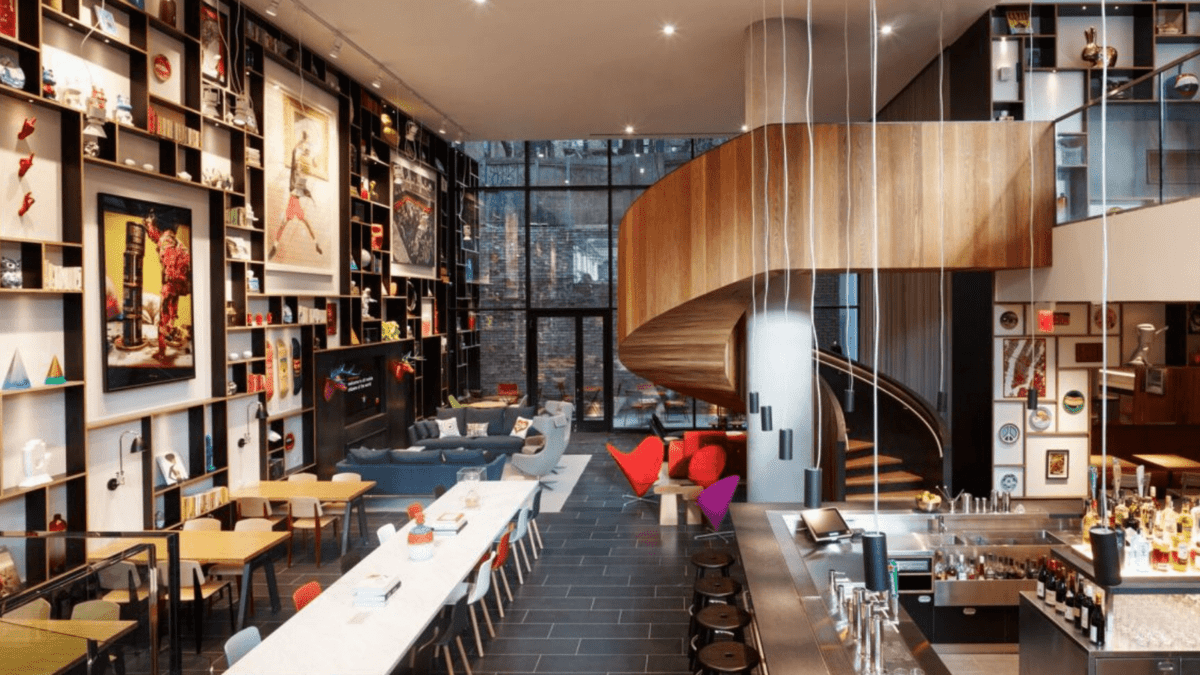
citizenM offers a new value proposition in the hotel industry.
A blue ocean move that led to the highest guest rankings in the industry
citizenM launched its first hotel in Amsterdam, opening up a new value-cost frontier of affordable luxury for frequent travelers. It has since opened hotels in prime locations of major cities like London, Paris and New York, and is continually expanding. Today, citizenM hotels earn the highest guest rankings in the hospitality industry, placing them in the “fabulous” and “superb” categories, alongside five-star hotels. Yet, their rooms are affordable to three-star customers.
The result is an average occupancy rate of 90% across its hotels – 80% higher than the industry average. The chain’s cost of staff is 50% lower than the industry average and profitability per square meter twice that of comparable upscale hotels.
In July 2025, Marriott International acquired the citizenM brand, then 37 hotels.
You can read the full case study in our book Blue Ocean Shift: Beyond Competing – Proven Steps to Inspire Confidence and Seize New Growth to learn how you too can look across strategic groups (in this case people who traded up to five-star hotels versus those who opted for three-star hotels) to gain valuable insights into your industry and identify a blue ocean opportunity. Then, learn step by step, how to translate these observations into a clear and concrete set of actions that will form the basis of your next blue ocean move.
Free interactive tool
Is your industry a red ocean? Draw its strategy canvas.
See the current state of play in your industry in one picture: the factors your industry competes on, and your value curve against your competitors’. Guide mode takes you through each step, AI suggestions help you pick the competing factors and key players, and you can export your canvas as a PDF.
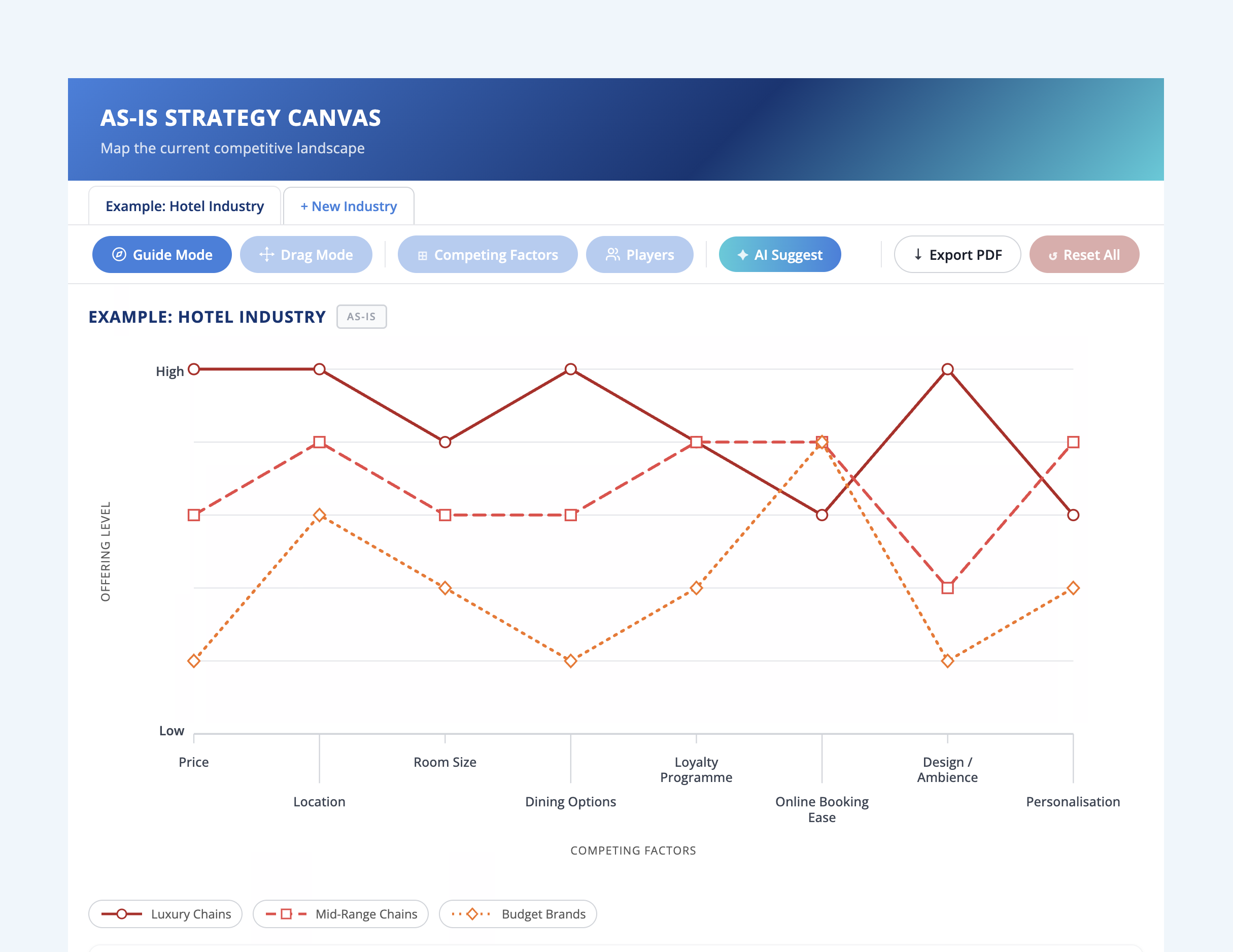
The As-Is Strategy Canvas is one of the interactive tools in the Blue Ocean Creation Program. Try it free on your company.
Enter your email and we’ll send you the link to the tool.
Watch our video on how citizenM created new market space in the hotel industry
Blue ocean strategy in the hotel industry: frequently asked questions
What is citizenM’s blue ocean strategy?
Rattan Chadha and Michael Levie, co-founders of citizenM, wanted to create a blue ocean with a new kind of hotel chain, one that would capture the growing mass of frequent travelers – what they call “mobile citizens” – whether traveling for business or for pleasure. citizenM launched its first hotel in Amsterdam, opening up a new value-cost frontier of affordable luxury for frequent travelers. The ERRC Grid above shows what it eliminated, reduced, raised and created.
What is citizenM’s business model?
citizenM hotels earn the highest guest rankings in the hospitality industry, placing them in the “fabulous” and “superb” categories, alongside five-star hotels. Yet, their rooms are affordable to three-star customers. The chain’s cost of staff is 50% lower than the industry average and profitability per square meter twice that of comparable upscale hotels.
Who founded citizenM?
Rattan Chadha and Michael Levie, both new entrants to the hotel industry.
What is a blue ocean strategy for hotels?
citizenM looked across strategic groups (in this case people who traded up to five-star hotels versus those who opted for three-star hotels) to gain valuable insights into its industry and identify a blue ocean opportunity. The full case is in Blue Ocean Shift.
Build a blue ocean strategy for your business
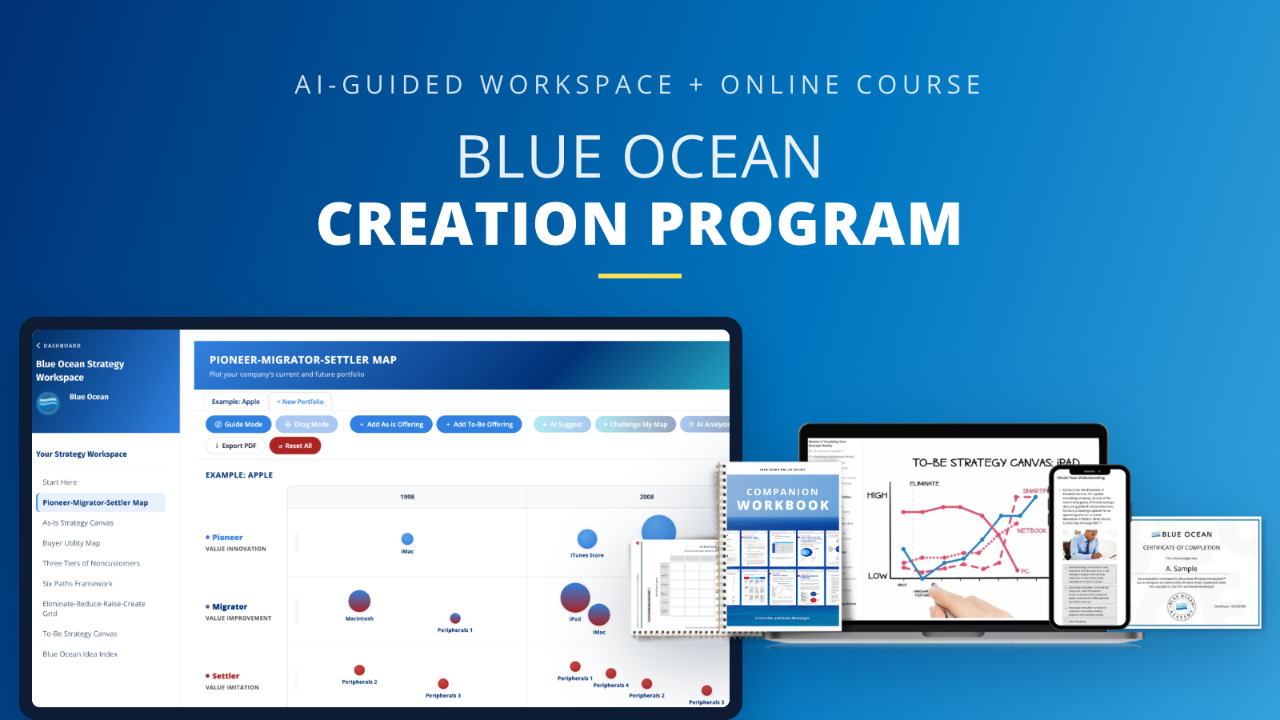
The Blue Ocean Creation Program is a self-directed workspace, online course and workbook that will help you learn and apply the tools, frameworks and processes to create a blue ocean.